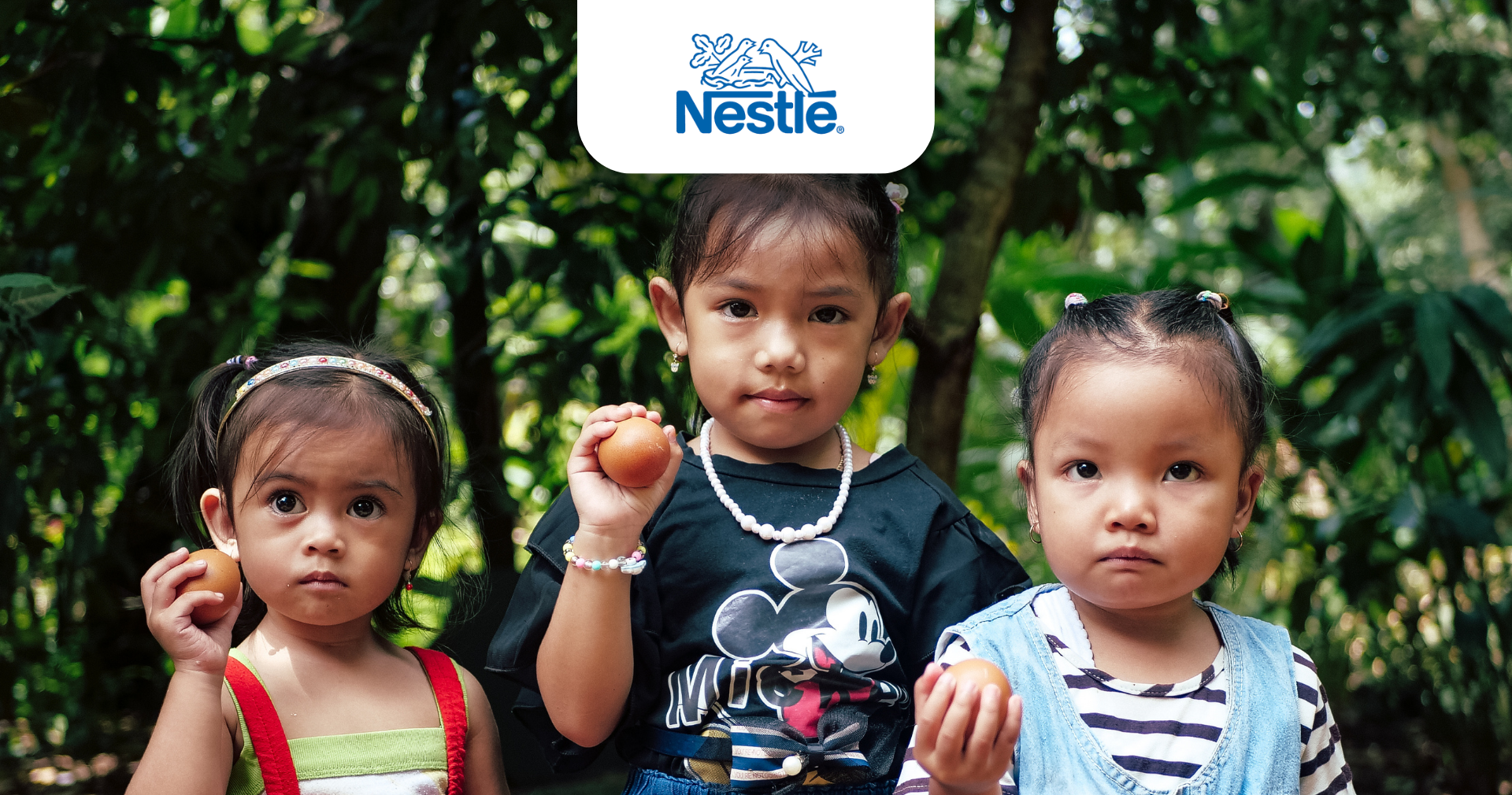
Nutrition Assistant Program: Nestlé Dukung Anak Lebih Sehat
22.5%
Reduction in Underweight and Severe Underweight Prevalence Across All Program Areas
1,1–1,2 Kg
Average Weight Gain Among Children During the Program
4,2–4,6 cm
Average Height Growth Among Children During the Program
The Highlight of this project

Background
Stunting — chronic undernutrition beginning in the womb — causes irreversible harm to children's brain development, with lifelong consequences for learning and productivity. Yet most interventions target children only after stunting has occurred, when the window for meaningful recovery has largely passed. This project takes a smarter approach: intervening before stunting takes hold. By identifying underweight children at highest risk and delivering both supplementary feeding and caregiver nutrition education, we address the root causes — poor dietary access and limited nutritional knowledge — at the earliest opportunity. The result: children recover sooner, families are better equipped, and the progression to stunting is stopped before irreversible damage occurs.
Solution
Our intervention delivers a proven, practical response to early-stage undernutrition. For six months, 598 at-risk children aged 1–4 receive daily supplementary nutrition — one egg and one serving of Dancow GroPlus — providing the consistent, high-quality protein and micronutrients critical for healthy development. Alongside this, caregivers participate in three structured nutrition education sessions, building the knowledge and habits needed to sustain healthy feeding practices beyond the program. Implemented across three districts — Karawang, Batang, and Pasuruan — from July 2025 to January 2026, this program is made possible through a strategic collaboration between PT Nestlé, Edu Farmers International, and Institut Pertanian Bogor (IPB University).
Result
The program delivered measurable, significant impact across all key indicators — and outperformed comparable interventions globally. Children gained an average of 1.1–1.2 kg in body weight and 4.2–4.6 cm in height, both statistically significant (p<0.01). These gains are remarkable in context: similar studies in Uganda and Indonesia reported weight gains of just 0.1–0.21 kg and height gains of 0.56–2.23 cm under comparable or longer interventions. Most critically, the prevalence of underweight and severe underweight dropped by 22.5% — more than double the reduction achieved in similar programs across Indonesia and Ethiopia, which reported reductions of 10–17.7%. Beyond physical growth, caregivers demonstrated improved nutrition knowledge, and children showed measurably better intake of energy, protein, iron, and calcium compared to baseline.