AgriCRF: Innovative Climate Risk Financing for the Agricultural Sector in the ASEAN Region
5000
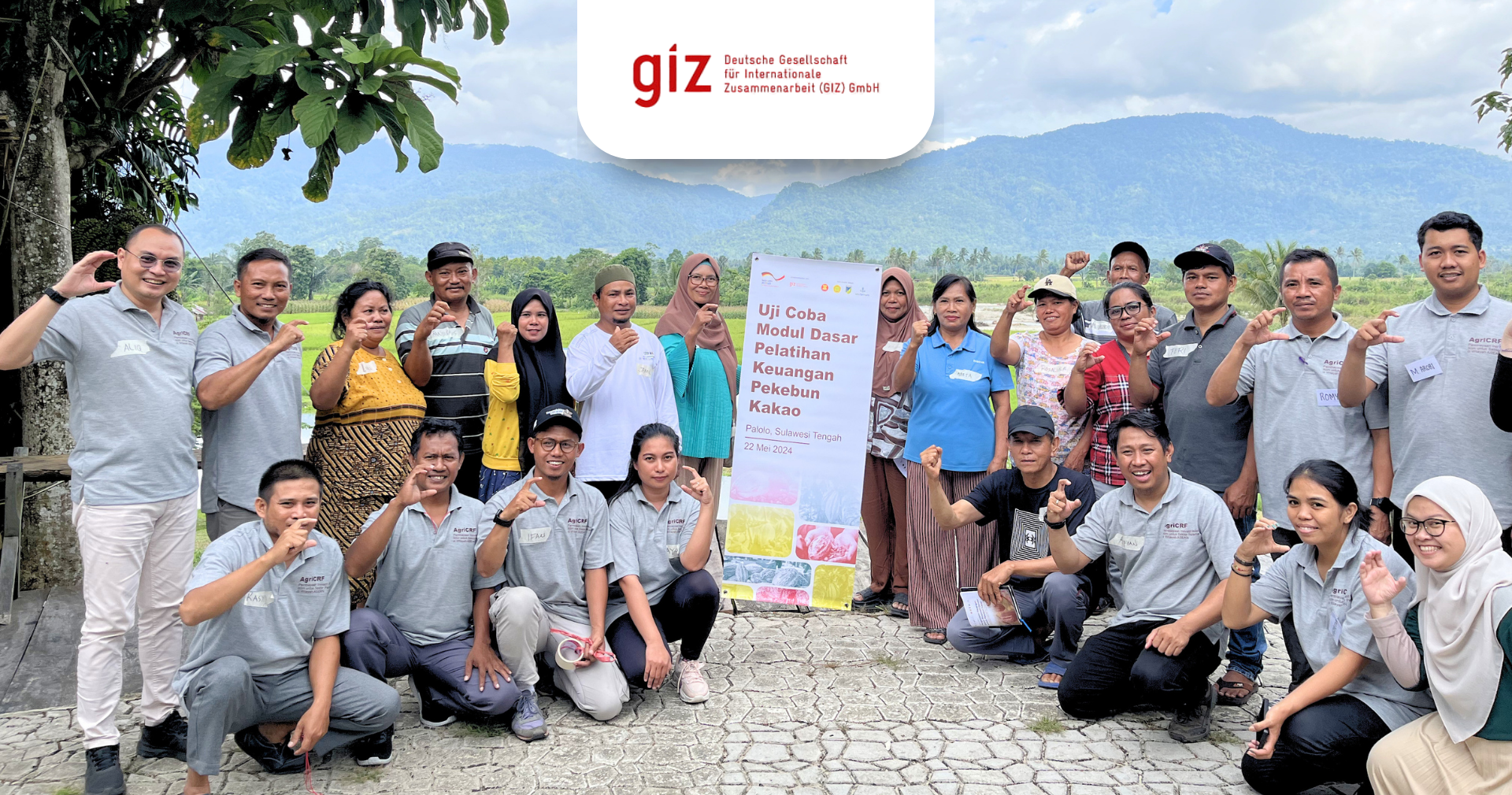
Cocoa Farmers Participated in Financial Education and Coaching
46%
Increase in Households Actively Recording Monthly Income and Expenditures
39%
Increase in Households Preparing Household Budgets
Background
Cocoa is one of the most important livelihood commodities in Central Sulawesi. However, cocoa farming households face increasing challenges from climate change, fluctuating income, aging plantations, pest pressure, and limited access to financial services. Many farmers manage their finances informally without written records, making it difficult to: - understand actual farm profitability, - plan household expenditures, - save consistently, - access formal financing, - prepare for climate-related risks. At the same time, climate variability has increased production uncertainty. Farmers frequently experience: - declining yields, - unpredictable harvest periods, - rising production costs, - unstable household cash flow. Despite these risks, access to financial literacy education, banking services, insurance products, and long-term farm investment planning remained very limited, particularly in remote cocoa-producing communities. The project also identified that financial decisions within farming households are often shared between husbands and wives, yet most agricultural training programs traditionally engage only one household member. This reduced the effectiveness of behavior adoption at the household level.
Solution
To address these challenges, Edufarmers Foundation, supported by GIZ through the Agricultural Climate Risk Financing (AgriCRF) initiative, implemented a multi-phase financial education program specifically designed for cocoa farming households. The program combined: - basic financial literacy, - climate risk awareness, - household financial planning, - financial recording practices, - coaching and monitoring, - linkage to financial institutions. A key innovation of the initiative was the use of a household-based learning approach, encouraging husbands and wives to participate together in training and coaching sessions. This strengthened collaboration in financial decision-making and improved knowledge retention within households. The project also prioritized: - participatory adult-learning methods, - local facilitators, - practical worksheets and pocketbooks, - household-level coaching, - continuous follow-up support. Beyond training delivery, the initiative connected farmers with: - banks, - insurance providers, - cocoa off-takers, - local stakeholders, creating an ecosystem that supports longer-term financial resilience and climate adaptation.
Result
The AgriCRF initiative demonstrated that financial education becomes significantly more effective when combined with continuous coaching, localized facilitation, and practical household engagement. Farmers not only improved their understanding of: - budgeting, - savings, - expense planning, - climate-related financial risks, but also began applying these practices in daily life. The project observed increasing adoption of: - income and expenditure recording, - household budgeting, - saving behavior, - productive reinvestment into cocoa farms. Coaching and monitoring proved especially important in translating training into real behavioral change. Many households initially struggled to consistently apply financial recording practices, but adoption improved over time through repeated household visits and personalized support. The initiative also strengthened local capacity by developing facilitators from farming communities and local institutions, creating a growing network of locally accessible financial education resources. Importantly, the project demonstrated that climate resilience is not only a technical farming issue, but also a financial management issue. By improving household financial planning, encouraging savings and investment behavior, and introducing farmers to formal financial services, the initiative laid a stronger foundation for long-term resilience in cocoa farming communities.