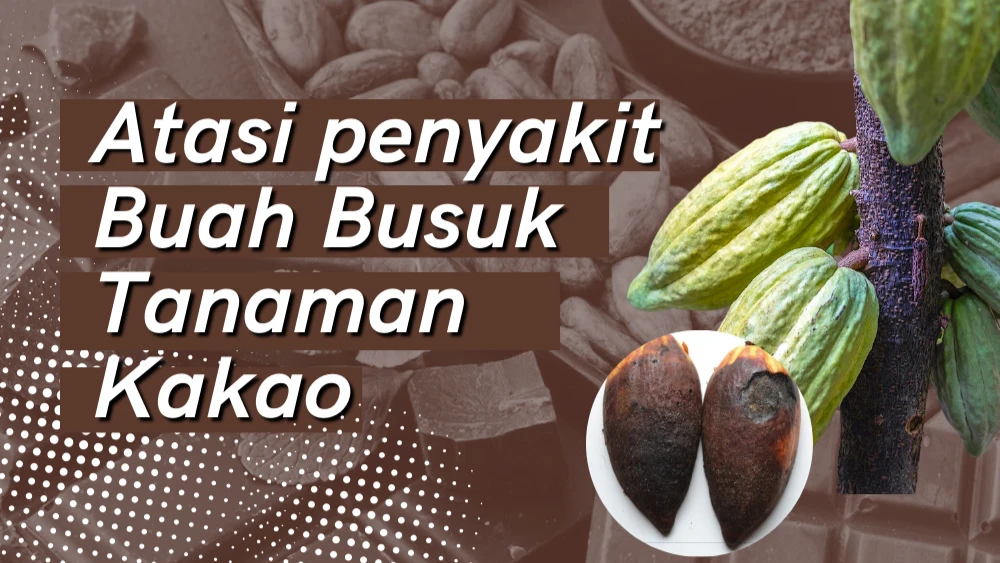
Pod rot disease in cocoa plants is characterized by the appearance of black spots on the outer skin of the fruit. Initially, the spots appear small, but they gradually spread across the entire surface of the pod. The disease does not only affect the outer surface; it also spreads to the inner part of the pod, causing the fruit to turn black. This disease can reduce cocoa production by 20–40%, and losses can increase up to 100% in areas with high rainfall and humidity.
Cocoa plants infected with pod rot disease should be treated immediately to prevent further spread and minimize damage. The following are steps that can be taken to manage cocoa plants infected with pod rot disease.
Sanitation Practices
Cocoa plantation areas with excessive waste can become breeding grounds for disease sources. Therefore, field sanitation should be carried out by burying pruning residues, leftover pod husks after harvest, and removing grass or weeds in drainage pits.
It is also important to remove rotten pods by picking them once every week and burying them at a depth of 30–40 cm in the soil. Afterward, the rotten pods should be burned to prevent the disease from spreading to healthy plants.
Fungicide Application
For pod rot disease, the recommended fungicide is one containing the active ingredient Mankozeb at a dosage of 2 g/liter, with a spray volume of 250 ml/tree.
Botanical fungicide spraying can also be applied by spraying a 10% clove leaf extract solution onto fruits showing mild disease symptoms.
Uprooting and Removal
Uprooting is carried out on cocoa plants with severe infection. Common signs include stem canker spreading around the entire stem circumference and plant wilting.
It is important to ensure that cocoa plant removal is done thoroughly, including the roots and surrounding soil mounds. Afterward, clean the plantation of all plant residues and soil mounds, level the land, and create a new drainage system.
Before cocoa plants become infected, whether under mild or severe disease pressure, regular monitoring should be conducted to detect early symptoms of cocoa pod rot disease.
Monitoring can be carried out from before pod formation until harvest. Observe cocoa stems for symptoms of P. palmivora fungal infection that may cause stem canker. In addition, it is important to monitor cocoa pods and calculate how many fruits are affected by the disease.
It is also recommended to consult findings during monitoring with agronomists or plant pathology experts to obtain advice and recommendations for pod rot disease management.
It is important to remember that controlling pod rot disease using chemical fungicides should be considered a last resort. Preventive measures should be implemented intensively, along with the application of Integrated Pest Management (IPM) principles.
References
Edufarmers. 2022. Cocoa Cultivation Techniques. Edufarmers: Jakarta.
Putra, S. et al. Control of Cocoa Pod Rot Disease Using Trichoderma viride and Potassium Fertilizer. In JurnalKultivasi, Vol. 21, August 2, 2022.