Chili cultivation can be a major source of income for farmers due to its potential to generate high profits during harvest. However, the highly fluctuating price of red chili creates both opportunities and risks. When prices reach IDR 80,000 per kilogram, farmers can earn substantial profits. On the other hand, when prices drop to as low as IDR 8,000 per kilogram, farmers may suffer significant losses.
High chili prices are often caused by limited supply in the market, usually due to crop failures resulting from pest and disease attacks. Conversely, prices tend to decline sharply during peak harvest seasons when supply is abundant.
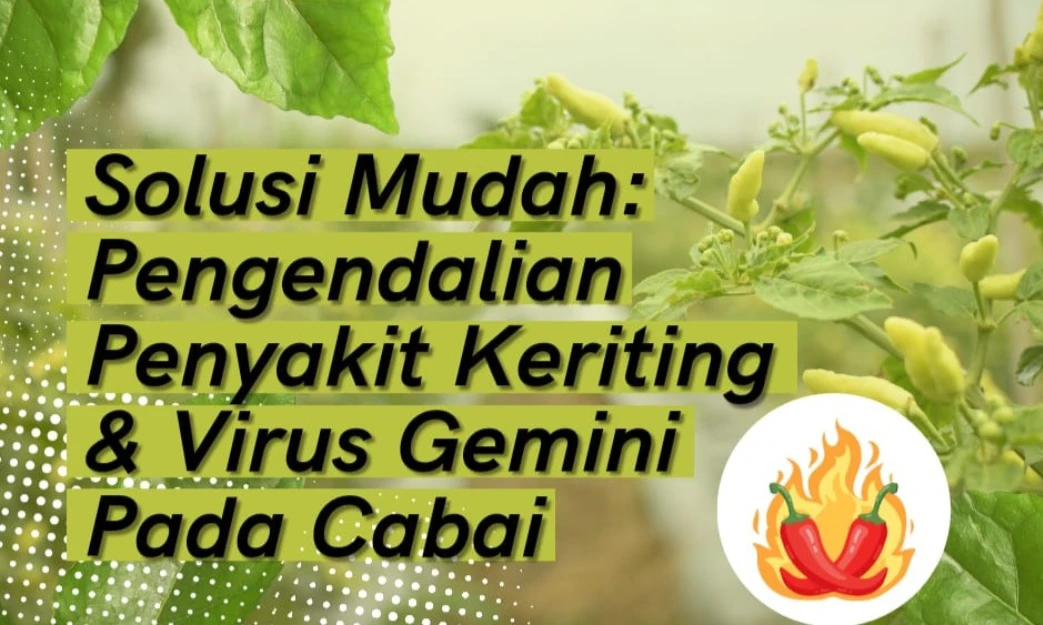
To maximize profits while ensuring good yields, farmers must protect their crops from pests and diseases. One of the most difficult diseases to control in chili cultivation is Gemini virus, which is transmitted by piercing-sucking insect pests (sucking pests).
Common symptoms of Gemini virus infection include:
Leaves becoming curled or distorted
Young leaves showing yellow mosaic patterns
Leaves becoming wrinkled, smaller, and thicker
Plants failing to produce fruit
Yield losses caused by this disease can reach up to 90%.
Factors Contributing to Gemini Virus Infection
The causes of Gemini virus outbreaks can be divided into external and internal factors.
1. External Factors
External factors mainly involve attacks from piercing-sucking insect pests such as:
Thrips
Whiteflies
Mites
Aphids
Other sap-sucking insects
Another contributing factor is the presence of host plants that support pest populations, such as billygoat weed (Ageratum conyzoides) and other plant families favored by these pests.
Environmental conditions also play a major role in pest development. Areas with relatively high temperatures, especially lowland regions, can accelerate pest life cycles. Pest eggs generally hatch faster in warmer environments than in cooler areas.
In addition, excessive use of harsh chemical pesticides may also accelerate egg hatching. In some cases, eggs that would normally hatch in five days may hatch in only three days.
Another common issue is pest resistance to pesticides. Resistance occurs when some pests survive pesticide applications and reproduce, resulting in future generations that are more resistant to certain active ingredients.
In addition to resistance, pest resurgence may occur due to improper pesticide use. Broad-spectrum pesticides may kill target pests, but they can also eliminate beneficial organisms such as:
Natural predators
Pollinators
Birds
Fish
Other beneficial organisms
As a result, pest populations may rebound even more aggressively.
2. Internal Factors
Internal factors are related to the condition of the chili plants themselves.
Some chili varieties are genetically more susceptible to Gemini virus infection. Susceptible varieties generally lack sufficient defense mechanisms to resist the virus.
The physiological condition of the plant also greatly influences vulnerability. Plants that are weak or stressed due to:
Nutrient deficiency
Excess or insufficient water
Poor soil conditions are more susceptible to viral infection.
The Disease Triangle Concept
In plant pathology, there is a well-known concept called the Disease Triangle. This concept explains that disease can only develop when three main factors are present at the same time.
1. Pathogen
The organism that causes disease, such as a virus, bacterium, fungus, or parasite.
2. Susceptible Host
A plant that is vulnerable to infection due to genetics, nutrition, or overall health.
3. Conducive Environment
Environmental conditions that support disease development, such as temperature, humidity, and weather conditions.
The Disease Triangle illustrates that disease occurs only when these three factors interact simultaneously. If one factor is absent or unfavorable, disease development will be limited or prevented.
In practice, disease management involves disrupting at least one side of the triangle by:
Reducing or eliminating the pathogen
Using resistant plant varieties
Modifying environmental conditions to reduce disease pressure
Strategies for Managing Piercing-Sucking Pests
To control piercing-sucking pests and prevent resistance, the following strategies are recommended:
Always use pesticides according to the recommended dosage and application interval stated on the label.
Rotate insecticides with different Modes of Action (MoA) to slow resistance development.
Avoid repeated use of insecticides with the same MoA.
Review insecticide usage history in nurseries before transplanting seedlings into the field.
Correctly identify target pests to improve application effectiveness.
Consider the systemic properties of products applied through soil or seed treatment.
Ensure proper spray coverage and retention, especially on leaf undersides, plant bases, and hidden areas such as flowers.
Apply insecticides during the most vulnerable stage of the pest life cycle.
Choose insecticides that effectively control pests while minimizing harm to non-target organisms.
When using insecticide mixtures, carefully evaluate the characteristics of each active ingredient.
Implement Integrated Pest Management (IPM) practices.
Regularly monitor pest populations to detect early signs of resistance.
Pay attention to local information regarding cross-resistance between different MoA groups.
Avoid using pesticide products with unclear composition or unverified registration status.