Expanding Bertani to New Farming Communities
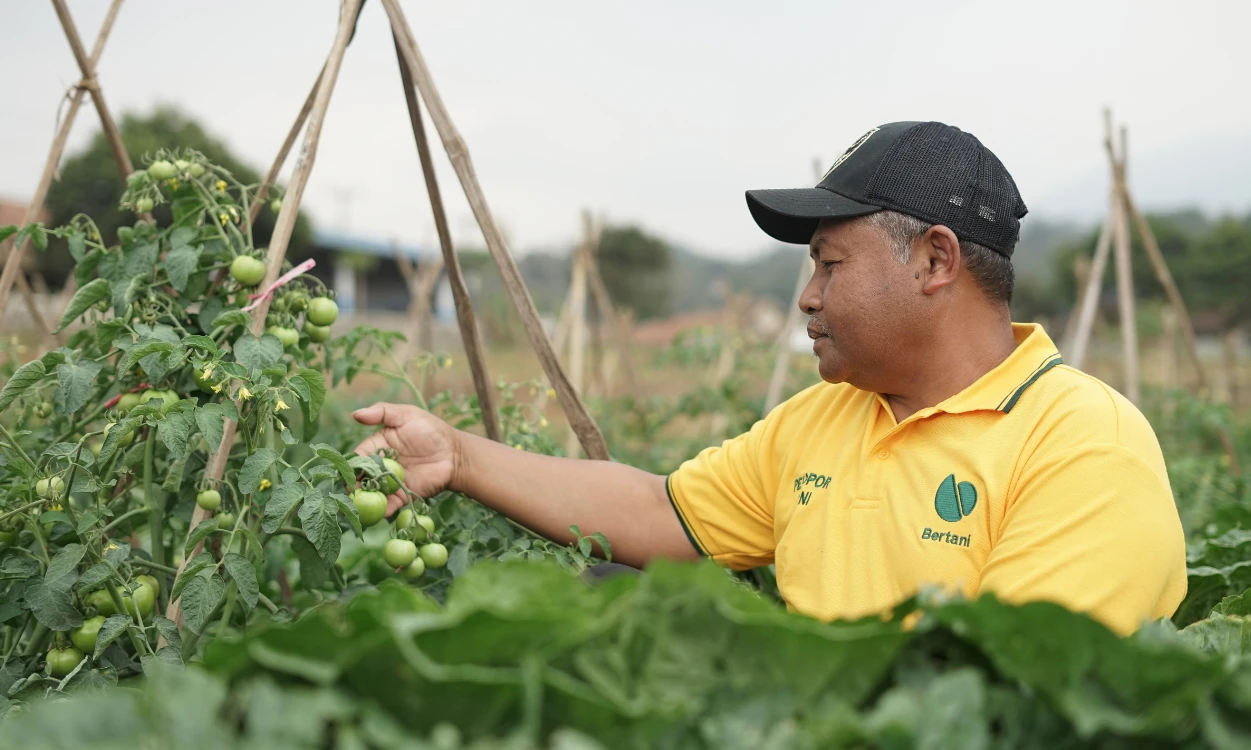
Edufarmers is a foundation that works with smallholder farmers in Indonesia to improve productivity, incomes, and resilience. Our flagship program, Bertani, combines three things: continuous field support, demonstration plots where farmers can see improved practices before adopting them, and digital advice from Pak Dayat, our AI-powered WhatsApp assistant.
Early this year, we published Bertani's impact in West Java, covering Subang, Indramayu, and Garut. In 2026, Edufarmers expanded Bertani to four new areas: Majalengka in West Java, and Sigi, Poso, and Parigi Moutong in Central Sulawesi. But before we can measure whether Bertani is making a difference in these new communities, we first need to understand where farmers are starting from.
How We Observe and Measure Changes
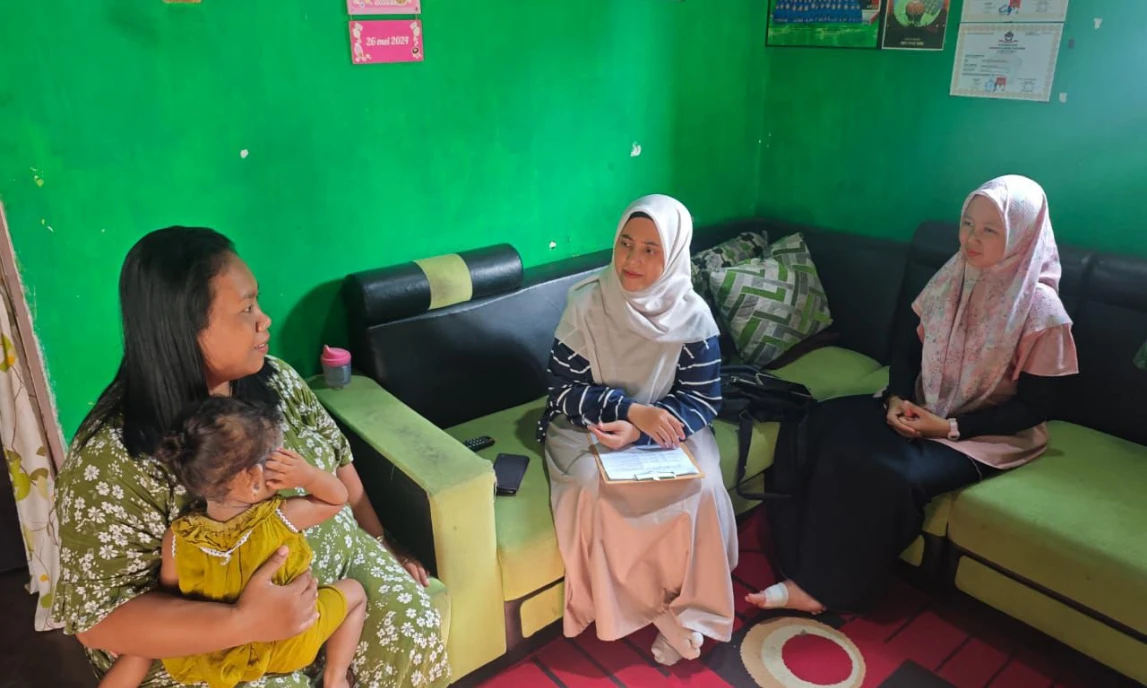
We selected control districts based on geographical proximity and randomly selected farmers to help ensure our sample was representative. However, because government data at the village level is limited, we had little information about the commodities farmers were growing before the survey.
As context, Bertani field facilitators specialize in supporting farmers growing rice and horticultural crops, which are common across the areas where we work. To our surprise, one of the first things that caught our attention was how different farmers in Bertani areas (treatment group) were from those in nearby villages (control group), even when the communities were relatively close to one another.
In Majalengka, for example, mangos isa prominent among Bertani farmers, while in the neighboring control villages, farmers are involved with mango mainly through nurseries, they grow the seedlings that farmers in our Bertani areas cultivate.
Poso tells a different story. Many control farmers focus on plantation crops such as coffee and cocoa, leaving relatively few horticultural farmers. In Sigi, control farmers also tend to cultivate rice, while those growing horticultural crops often do so on relatively small plots. Meanwhile in Parigi, we were able to find large number of rice farmers in both Bertani and neighboring control villages.
These differences show why understanding farmers’ starting conditions and commodities is essential as it influences how we measure changes and the validity of our findings. The baseline gives us our starting point. After harvest, we will compare the changes in farming behaviors, product use, yield and income.
Where a crop has enough farmers in both treatment and control groups, we will use Difference-in-Differences (DiD) to compare how outcomes change over time. This helps account for external factors that affect farmers in both areas, such as weather, pest pressure, and market prices.
But DiD will not be suitable for every crop. Some crops have very few farmers in the control areas to act as a comparison. For these, we will use commodity-specific analysis comparing outcomes before-and after the program.
What Farming Look Like Across These Region
Outside of yield and increase of income, one of the key changes we aim to see changes in farming behavior, especially sustainable ways of farming that Bertani promotes. Several key challenges in Indonesia’s agricultural sector includes carbon emissions, low soil health due to chemical overuse, and limited access to agronomic knowledge.
At baseline (prior to Bertani entering), we see a high carbon footprint among rice farmers. 64% farmers are still burning rice straws after harvest. The proportion is higher in Central Sulawesi (82%) than in Majalengka (8%). However, low burning in Majalengka does not necessarily mean better straw management to improve soil health, as only 11% of these farmers compost their rice straw. Additionally, 8% of farmers have tried to implement Alternate Wetting and Drying, a farming technique which lowers methane production as rice fields are not flooded throughout its cycle. As Bertani promotes AWD as a practice in Majalengka we hope to see changes in these practices.
In terms of improving soil health, reducing chemical agri-inputs and synthetic fertilizers is a big challenge in Indonesia. Especially as fertilizers are heavily subsidized and farmers prioritizing present yield. To steadily reduce the overreliance of chemicals overtime, Bertani introduces bio-products to farmers as alternative to maintain yield. At baseline, 34% of farmers reported using at least one biological product, either bio-decomposers or biostimulant, showing considerable room for wider adoption.
To support the promotion of sustainable practices, Bertani aims to make agricultural knowledge more accessible through Pak Dayat, our Whatsapp based agronomic-AI. As we just entered these areas, at baseline only 4% of farmers have accessed Pak Dayat. The number is low, as we’ve only introduced the chatbot to a small number of farmers when we began collecting the data. We hope see these numbers rise at endline, especially in comparison to control villages that have not been reached by Bertani.
As harvest seasons are here, mid-September in Majalengka and October in Central Sulawesi we will be collecting endline data soon. Look forward to our future reports on the impact of Bertani in our new areas.