A partnership is helping thousands of West Java rice farmers turn a burning problem into healthier soil, better harvests, and cleaner air.
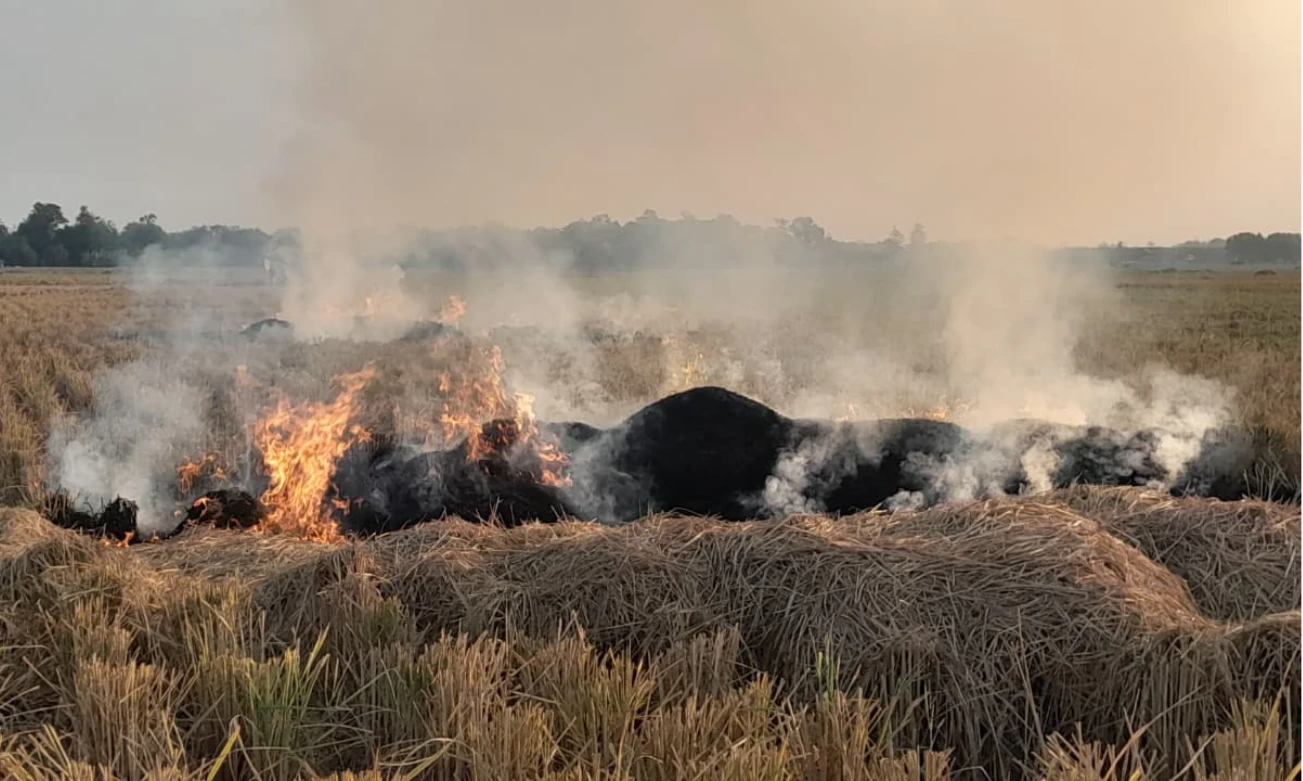
Every rice harvest in Indonesia leaves behind millions of tons of rice. For generations, the fastest and cheapest way for farmers to clear their field before the next planting season has been to burn it. Nationwide, an estimated 19.3 million tonnes of rice straw are burned each year (Ade et, al., 2016), releasing greenhouse gasses and thick haze while stripping the opportunity for soil to regain nutrients from straw decomposition.
We are announcing a new pilot, developed in partnership with Proximity Design to help farmers break their habit of burning straws.
Utilizing Edufarmer’s Bertani ecosystem in Indramayu, the pilot introduces two regenerative practices that work together:
No-burn land preparation. Instead of setting their fields alight after harvest, we introduce the application of bio-decomposers directly to straw stubbles. Within two weeks, microbial activity breaks the residue down into organic nutrients that return to the soil. What previously created waste and pollution to the local community can now be turned into an investment for future harvests.
Biostimulant application during the growing season. Once rice has been planted, we encourage farmers to apply a seaweed biosimulant that improves nutrients uptake, strengthen the plant’s resilience to stress and support better flowering and grain fill, improving both the health of the crop and size of harvest.
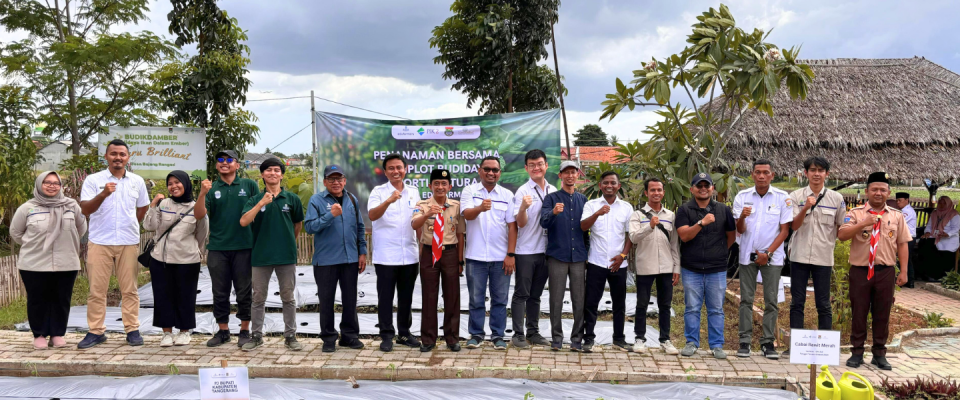
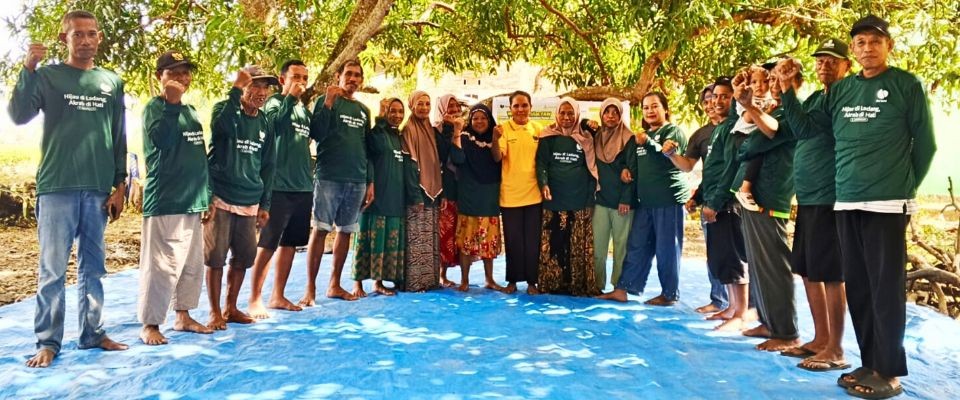
The two practices are demonstrated on plots run by Edufarmers Pelopor Tani (Pioneer Farmers), who are influential and trusted farmer figures in the community and promotions are conducted surrounding the results found in the demonstration plots. As farmers directly experiment in a small plot first and able to see the results directly, we are removing farmers risks and doubts over the process, especially as many farmers trust what they can see growing in their neighbour’s field rather than what they’re told in a meeting.
Partnership with Proximity Design
Edufamers and Proximity Design share the mission to support smallholder transition towards regenerative agriculture, restoring soil health and increasing farmer’s incomes. Proximity Design has spent two decades helping farmers in Myanmar’s Delta move away from heavy reliance on chemical inputs and degraded soil. Many rice farmers in West Java face similar challenges today as farmers in Myanmar’s Delta, particularly the heavy reliance on chemical inputs that diminish yields each season due to degraded soil.
Through this partnership, we aim to test how regenerative, no-burn practices can be promoted at scale through co-learning across the ASEAN borders. In 2023, Proximity Design has evaluated the no-burn practice and found the practice cut open-field burning by roughly one-third to three-quarters (nearly eliminated among full adopters), lifted paddy yields by 13%, and grew farm profitability by 54%, without a meaningful increase in production costs. Sixty percent of adopters also reported better soil health.
This West Java pilot is a direct attempt to replicate that evidence-backed approach, using Edufarmers' established Bertani ecosystem — its farmer-trust network, demo-plot model, and last-mile agri-input distribution — as the delivery engine. Edufarmers' field teams are building relationships with farmers through demo plots, results showcases, mid-season meetings, and harvest debriefs, while also partnering with district extension offices to co-develop training materials and train officers who will keep promoting the practice after the pilot ends. Proximity Designs is contributing hard-won insight on product marketing, behavior change, and what it takes to move a farmer from curiosity to sustained adoption.
Opportunity to Scale
Rice-straw burning accounts for nearly 80% of agricultural PM2.5 emissions in West Java, with the practice concentrated in hotspots like Indramayu, Subang, and Karawang.* In a recent Edufarmers survey of 683 rice farmers across just two of those districts, 72% said they still burn their straw after harvest. West Java alone is home to more than 3 million rice farming households. If no-burn practices spread across the region's rice belt, the shift could touch over one million hectares of paddy — reducing haze and emissions at a scale that matters regionally, while rebuilding soil fertility field by field.
We’re looking for funders to bring this program at scale. Currently we are piloting the model across four districts, which is a different task than bringing it to roughly 20 other rice growing districts in West Java or the millions of hectares burned across the region each year, this is a gap we can’t close alone. Every dollar invested has the potential to not only build farmer’s income but also displacing open burning at a moment when Southest Asia fire and haze season is intensifying across borders.
Reach out to us at partnership@edufarmers.org to learn more about what scaling this pilot could look like.
We'll be sharing what we learn as the pilot unfolds in the meantime. Watch this space for updates from the field.