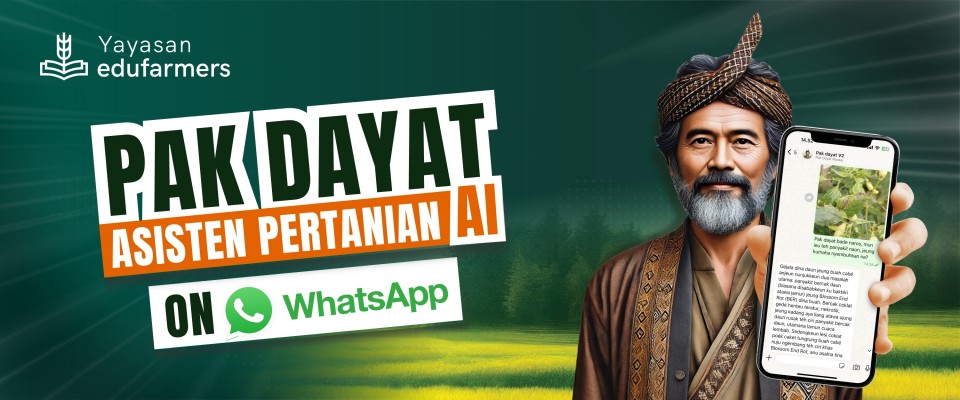
In Indonesia, Edufarmers has been exploring how artificial intelligence can help make trusted agronomic knowledge more accessible to smallholder farmers. Through Pak Dayat, our AI-powered agronomic chatbot, farmers can access practical guidance on crop health, pests, diseases, and other farming challenges through a digital platform designed to provide support when they need it.
Building on the experience and lessons from this work, Edufarmers is now taking the next step: promote AI-powered agronomic advisory tools to smallholder farmers across the ASEAN region. This initiative aims to reach at least 200,000 smallholder farmers and agriculture extension workers in Thailand and Vietnam.
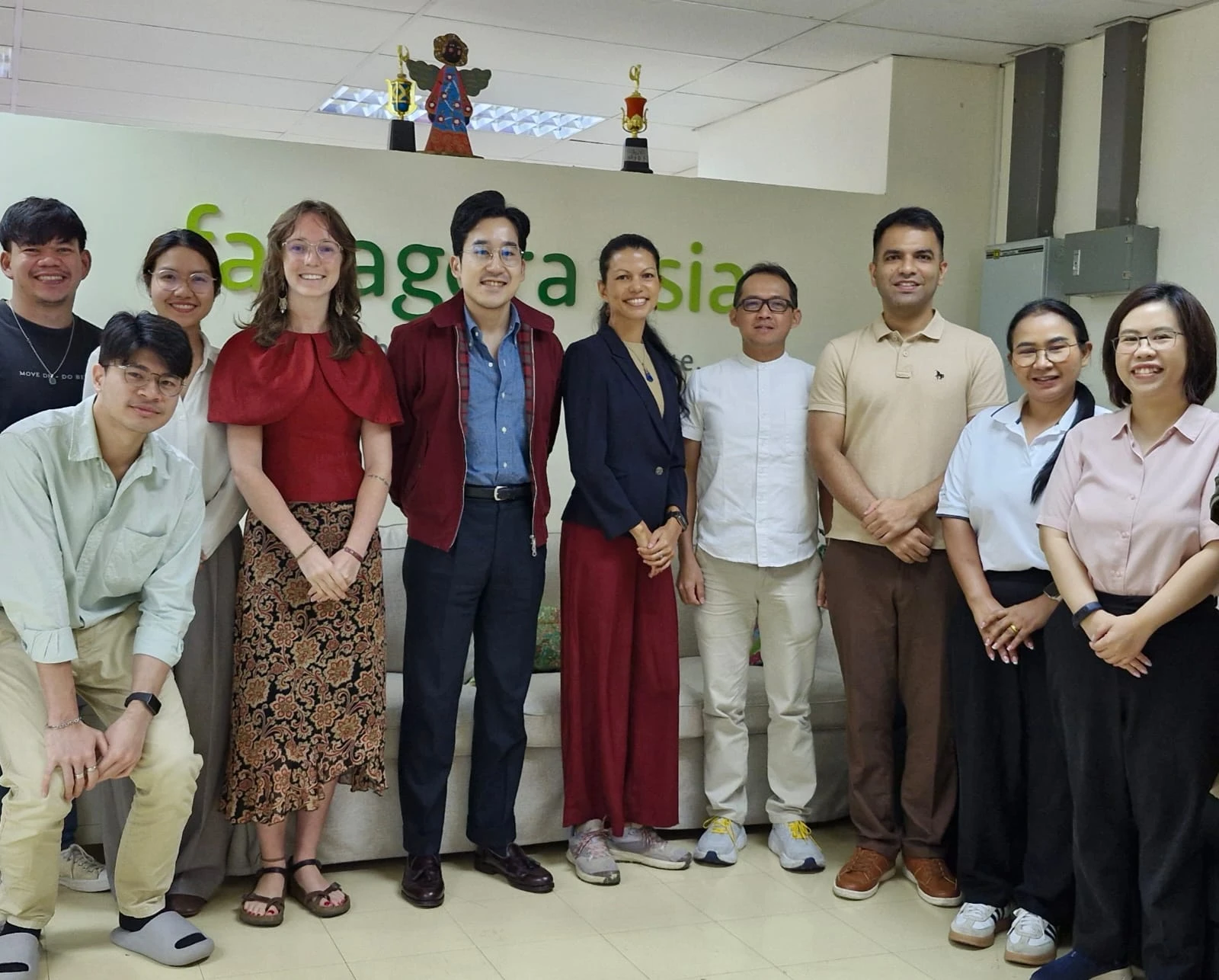
Through a new partnership with Fairagora Asia, supported by Google.org, Edufarmers is expanding its Agri AI Solution programme to reach rice and sugarcane farmers across Thailand. The programme combines AI-powered agronomic guidance with hands-on training in Good Agricultural Practices (GAP), helping farmers access relevant information and building the knowledge and confidence to put it into practice.
The opportunity is significant. Every farming season, smallholder farmers make dozens of decisions that can shape the outcome of their harvest and livelihoods. When should they plant? How much fertilizer should they apply? What is causing their crops to decline? How can they respond to a pest or disease outbreak?
Yet timely, reliable, and locally relevant agronomic advice is not always within reach.
Climate change is making growing seasons less predictable; rice production in Thailand is projected to decline by around 7% as warmer, wetter conditions take hold. Input costs continue to rise. And the gap between the agricultural knowledge farmers need and the support available to them remains a persistent challenge.
This programme builds on Edufarmers experience in Indonesia to explore how technology, combined with local expertise and hands-on training, can help close that gap in Thailand.
From AI guidance to practical action
Technology alone cannot transform farming. For AI to be useful, its guidance must be trusted, relevant to local farming conditions, and practical enough to apply in the field.
That is why the programme brings together digital technology and in-person learning.
Working with Fairagora Asia as the implementing partner on the ground, the programme will focus on four interconnected areas:
1. Localising the solution
Agriculture is deeply local. The challenges faced by a rice farmer in Thailand can differ significantly from those faced by farmers elsewhere.
The Agri AI tool will therefore be adapted to Thailand's rice and sugarcane farming systems, incorporating local crop conditions, pest and disease patterns, and validated Good Agricultural Practices. Field data collection and agronomic scoping will help ensure that the guidance is grounded in the realities farmers face.
2. Piloting with farmers
Before reaching farmers at scale, the solution will be tested directly with the communities it is designed to serve.
Farmers will interact with the tool, share feedback, and help identify opportunities to improve the quality, relevance, and usability of the guidance. These insights will inform further refinement of the solution before wider dissemination.
3. Building knowledge and confidence
AI can provide information. Farmers need the knowledge and confidence to act on it.
Through in-depth, hands-on training in Good Agricultural Practices, farmers will learn how to apply improved agronomic practices in their own fields. Progress will be measured through before-and-after knowledge assessments to understand whether the training is translating into meaningful improvements in agricultural knowledge.
4. Reaching farmers where they are
Rather than asking farmers to learn a new app, the tool is built into the messaging platforms they already use every day, meeting them where they are. Farmers can ask questions by sending a photo of an affected crop or a simple voice message, andreceive guidance in return.
Supported by localized communications and community outreach, wider dissemination will help make AI-powered agricultural support more accessible to farmers beyond the programme's intensive training cohorts.
In line with the programme's commitment to public benefit, all training materials, content, and code developed through the project will be released under open licences and made freely available, so that others working to support smallholder farmers can build on what we learn.
Reaching 100,000 farmers across Thailand
Over the life of the programme, the project aims to reach 100,000 rice and sugarcane farmers across Thailand.
This includes:
15,000 farmers receiving in-depth training, with targets to:
Improve knowledge scores among 70% of participants
Support 20% of participants in adopting improved agricultural practices
Contribute to improved yields and incomes for 15% of participants
A further 85,000 farmers will be reached through wider dissemination, with the aim that:
70% understand how AI can support their farming
50% can recall specific agronomic guidance, such as pest identification or nutrient management
For us, these numbers represent more than reach. They represent farmers actively seeking answers to real challenges in their fields and the potential for technology to become a practical, accessible source of support when they need it most.
Technology that meets farmers where they are
The future of agriculture will require both innovation and practical action.
By combining AI-powered agronomic guidance with local expertise, Good Agricultural Practices training, and community-based outreach, Edufarmers and Fairagora Asia are working to make agricultural knowledge more accessible to the farmers who need it most.
Building on what we have learned through Pak Dayat in Indonesia, this partnership represents an opportunity to adapt and extend that experience to a new context, supporting smallholder farmers in Thailand to make more informed decisions, strengthen their farming practices, and build more resilient livelihoods.